 Hye Sharzhoom Armenian Action
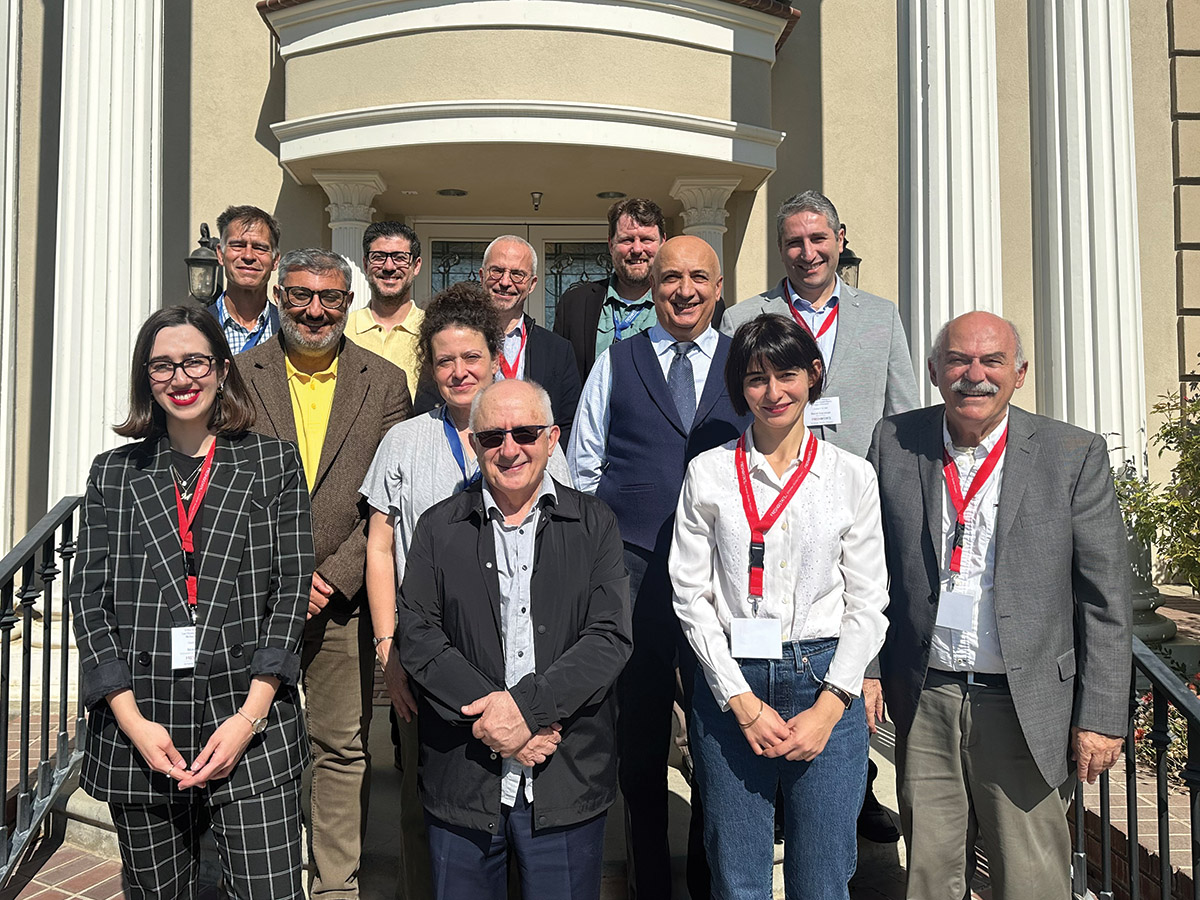
Conference participants. Front row, left to right: Dr. Merisa Sahin, Dr. Ümit Kurt, Dr. Janet Klein, Dr. Taner Akçam, Dr. Duygu Tasalp, and Prof. Barlow Der Mugrdechian. Back row, left to right: Dr. Michael Provence, Dr. Hagop Ohanessian, Dr. Yiğit Akın, Dr. Kent Schull, Dr. Ekrem Yener, and Dr. David Zakarian.
Photo: ASP Archive
Natalie Agazarian
Editor
On October 17-18, 2025, the Armenian Studies Program hosted an international academic conference, “A New History-Writing on Late Ottoman-Turkish History: The Impact of Memoirs.”
Organized by Prof. Barlow Der Mugrdechian (Fresno State) and Dr. Ümit Kurt (University of Newcastle, Australia), the conference featured nine scholars from throughout the world. The conference was sponsored by the Thomas A. Kooyumjian Family Foundation, the Leon S. Peters Foundation, the Ralph Shapazian Memorial Fund, and the Florence Hamparson Memorial Fund.
The conference was organized into three panels devoted to perspectives on late Ottoman and Turkish historical scholarship, focusing on recent work on the memoirs of members of the Ottoman Turkish Committee of Union and Progress. The conference, which brought together scholars from the United States, Europe, and the Middle East, created a forum for dialogue on the complexities of the late Ottoman Empire. The two-day event was held at the University Business Center and the Smittcamp Alumni House on the Fresno State campus.
Dr. Taner Akçam (director of the Armenian Genocide Research Program of the Promise Armenian Institute at UCLA) gave the keynote presentation on “Beyond Fragmented Narratives: The Necessity of an ‘Integrated’ History: The Case of Malak Barsom and the Sheikh Said Rebellion,” in which he argued for a more unified approach to Ottoman and early Republican history.
Following the keynote speech, the conference continued with panel one, moderated by Dr. Ümit Kurt. Dr. Janet Klein (University of Akron), presented “Reading Against the Grain of Memoirs and Diaries in Researching Late-Ottoman Kurdish and Armenian Histories,” examining how these personal writings can yield insights into Kurdish-Armenian relations and late Ottoman political dynamics. The panel concluded with a lecture by Dr. Michael Provence (University of California, San Diego) on “Surprises in the Memoirs of Arab Ottoman Officers and Great War Veterans,” which highlighted the memoirs of Arab officers within the Ottoman military.
Panel two, moderated by Prof. Barlow Der Mugrdechian (Fresno State), featured three scholars whose work demonstrates how personal writings can challenge historical narratives. The first presentation, delivered by Dr. Kurt was titled “Republic of Perpetrators: Talat Pasha’s Genocide Technocrat Mustafa Reşat Mimaroğlu,” tracing the life of Mimaroğlu, a key bureaucratic figure whose career intersected with the violence during the Armenian Genocide. Dr. Yiğit Akın (Ohio State University) then presented “Local Politics, Intellectual Periphery, and the End of the Empire: The Diaries of Yusif Cemil Bey of Simav.” Dr. Akın explored the diary of Cemil Bey, whose writings provide evidence of local political tensions as the Ottoman Empire collapsed. The final panelist was Dr. Duygu Tasalp (University of Louvain), who spoke on “The Father Figure in the Memoirs of Unionist Young Turks: Between Victimization, Betrayal, and Regeneration,” which examined how Young Turk leaders constructed symbolic father figures within their memoirs.
After a short break, panel three convened, moderated by Dr. David Zakarian (Fresno State). This panel continued the conference’s emphasis on memoirs and personal documents, but studied them through legal, social, and gendered lenses. Dr. Kent Schull (Binghamton University) opened with “Reassessing the Role of Ottoman Prison Convicts in the Armenian Genocide: Triangulating CUP Memories and Trial Proceedings with Ottoman Prison Statistics.”His analysis challenged assumptions and contributed to a more sophisticated understanding of state-directed mobilization. Next, Dr. Merisa Sahin (University of Michigan, Ann Arbor) presented “Ahmed Riza and Selma Riza: An Ittihadist Glance on Women’s Rights,” focusing on the sibling pair whose writings reveal the contradictions within Young Turk discourse on gender equality and modernization. The panel and conference concluded with a presentation by Dr. Ekrem Yener (Bilgi University) on “An Examination of Mehmed Cavid Bey’s Newly Disclosed Diary for Insights into the Thoughts and Relationships of Unionist Leaders.” Dr. Yener discussed the diary’s significance in highlighting the personal relationships and political anxieties of CUP leadership during the Empire’s final years.
In conclusion, the conference highlighted the essential role of memoirs, diaries, and personal writings in reconstructing a more nuanced history of the late Ottoman Empire and the Armenian Genocide. By highlighting voices often marginalized or overlooked, the presenters demonstrated how personal documents can reshape broader narratives and deepen our understanding of the era.
The conference proceedings were recorded and are available for viewing on the Armenian Studies Program YouTube channel:
bit.ly//armenianstudiesyoutube.